
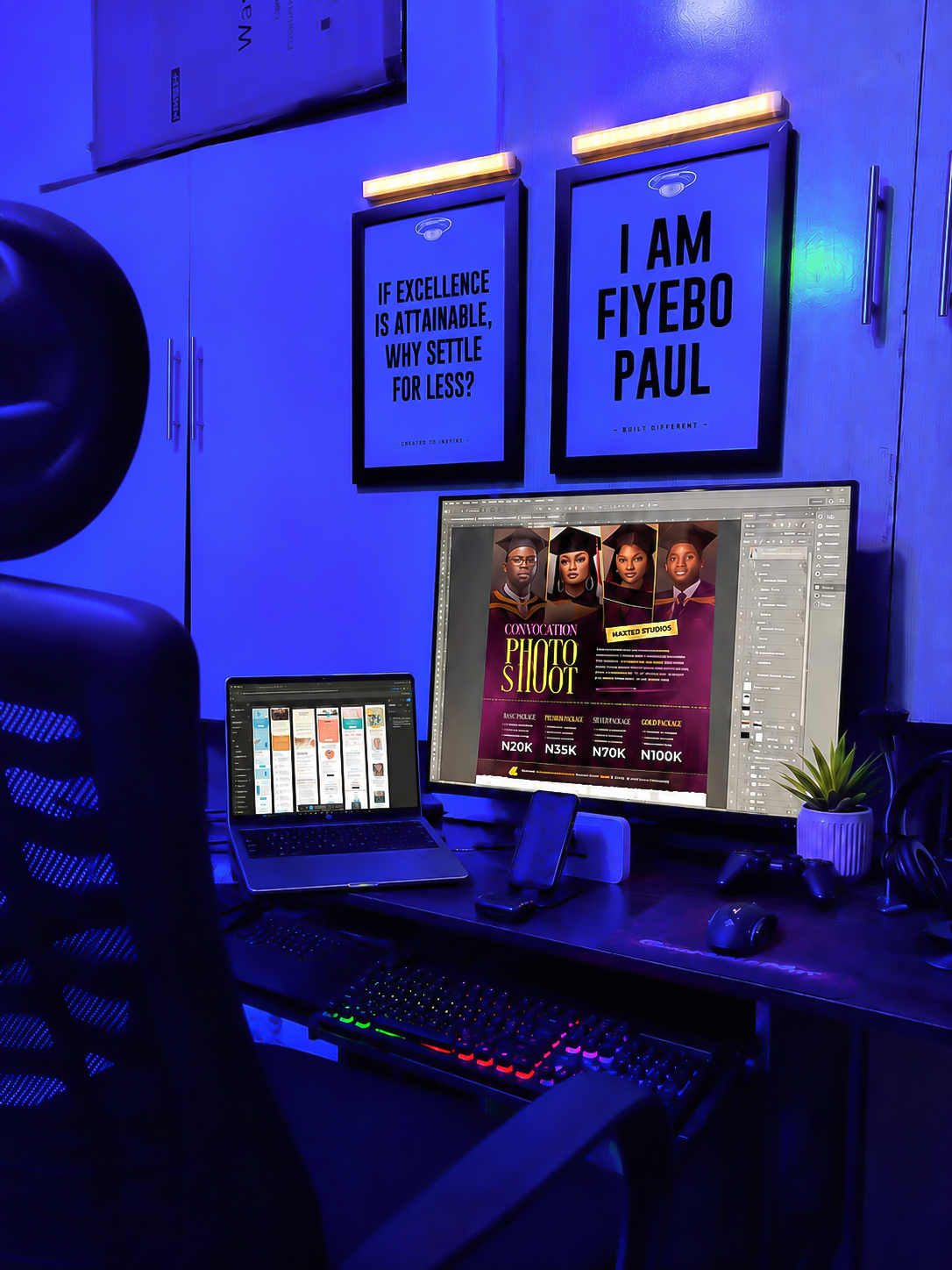
There was a time when I could spend an entire day working on one Instagram design. Not because the client asked for it or because the project was complicated. I just could not leave it alone.
I would finish the design, stare at it, notice something that felt slightly off and open Photoshop again. Change the font. Undo it. Move the headline two pixels. Change the image. Change it back. Adjust the shadows. Export it. Open the export, notice something else and return to Photoshop.
At some point, I was no longer improving the work. I was simply looking at it too much. Back then, I thought that was what being serious about design meant. It took me a while to realise that sometimes you are not being serious. You are just scared to let the work go.
When attention to detail becomes perfectionism
Attention to detail matters. Typography, spacing, image quality and alignment can turn an average design into a strong one. A careless crop can damage an otherwise beautiful layout.
But there is a point where attention becomes obsession. You start changing things because you can, not because they need changing. I would zoom in to 300% and worry about details nobody would ever see at the actual viewing size. I would compare two almost identical shades of grey and convince myself one was obviously better.
The file kept changing, but I was not necessarily becoming a better designer. I was postponing the uncomfortable moment when I had to say, “This is finished.”
Real client work changed my definition of finished
Client work teaches lessons that tutorials cannot. When you design for yourself, you can spend hours deciding between 24px and 26px. When a client needs the graphic for an event that evening, you have to make a decision.
I sometimes delayed sending work because I wanted to make one final adjustment. That adjustment became thirty minutes, another export and another round of staring. Meanwhile, the client was not waiting for perfection. They were waiting for a design they could use.
That experience changed how I think about completion:
A design is not finished because the designer has run out of things to change. It is finished when another change is no longer making it meaningfully better.
That does not mean lowering your standards. It means connecting every creative decision to a purpose.
Most people experience the whole design, not your tiny adjustments
You might spend six hours creating something another person sees for six seconds. That is not an insult to the work. It is how most visual communication is consumed.
Someone may see a flyer while walking past it. A customer may view a social post between conversations. A potential client may open your website in a taxi. They are not zooming into the corner of the layout. They are asking:
- Did it catch my attention?
- Can I understand the message?
- Does it feel relevant and trustworthy?
- Do I know what to do next?
I had to learn to judge the design as an experience, not as a collection of tiny decisions. The headline and visual hierarchy deserve more attention than a shadow nobody will notice.
Perfectionism has a real cost
Perfectionism sounds like a positive quality. People praise you for caring. The problem appears when you spend four hours on work that needed two.
For a freelance designer, that extra time is not free. If the project was already strong at hour three and you continued until hour seven, you did not automatically create four more hours of value. You may have used time that could have gone into another project, learning, rest or simply having a life outside the screen.
Creative energy is limited. Protecting it is part of doing good work.
The questions I ask before making one more change
I still get carried away sometimes. I still stare at a website section and feel that something is wrong before I can explain why. The difference is that I now stop and ask:
- Does this change make the message clearer?
- Does it improve the visual hierarchy or user experience?
- Does it make the brand feel more consistent?
- Am I solving a real problem or reacting to boredom?
- Would the intended audience notice the improvement?
If I cannot explain what the change improves, I usually leave it alone. This simple check has saved me hours and made me more confident when presenting work.
Good design needs care—and a stopping point
I do not think designers should stop caring about details. I care more about my work now than I did when I endlessly polished every file. The difference is that my attention is more intentional.
There are deadlines, clients, other projects and a life beyond the screen. Eventually, you have to close the file, send the work and move on. The next project may teach you something the current one cannot.
Maybe becoming a better designer is not learning how to make everything perfect. Maybe it is learning what deserves your attention, what does not, and when the work has done enough.
I am still learning that part. But I am finally learning to trust the work—and myself—enough to press send.