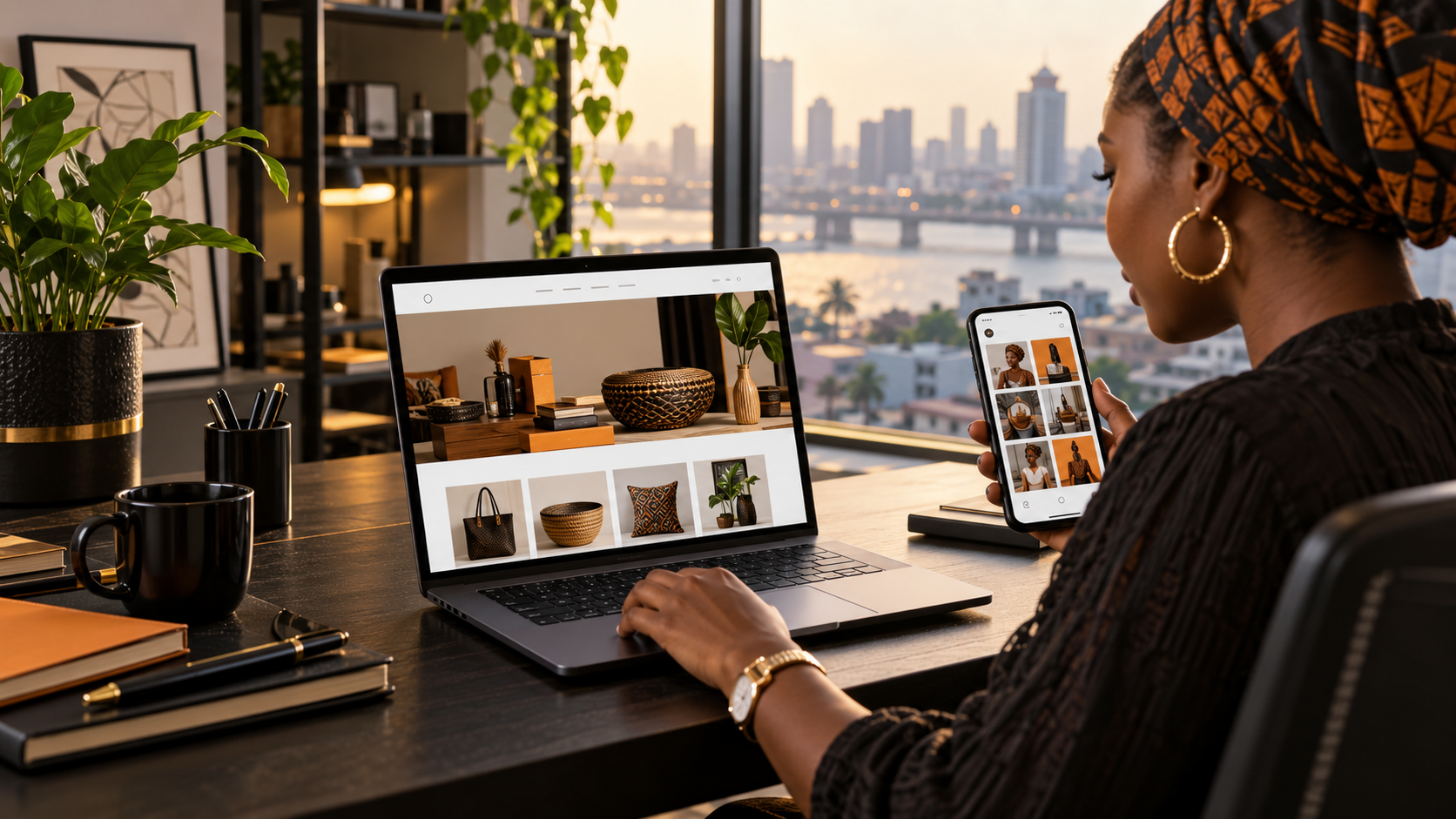
Yes, most growing businesses still need a website even when Instagram, TikTok, Facebook or WhatsApp already brings customers. Social media is excellent for attention and conversation. A website gives the business a searchable, organised home that it controls.
That does not mean every new business needs a large website immediately. A social profile may be enough to test an idea, take early orders or build an audience. The need for a website becomes clearer when customers want more proof, information or convenience than a social feed can provide.
The simple difference: discovery versus decision
Social media is built for discovery. People scroll, react, share and send messages. Your content competes with friends, creators, news and entertainment.
A business website is built for focused decisions. A visitor can compare services, read a case study, check prices, understand a process and contact you without being pulled into another feed. The strongest setup is usually not website or social media. It is social media bringing attention to a website designed to turn that attention into action.
7 things a website does that social media cannot do as well
1. It gives you an online asset you control
Your social account exists on somebody else’s platform. Its reach, layout and rules can change. An account can also be restricted, hacked or removed. A domain and website give your business a stable address that is not tied to one algorithm.
2. It helps customers find you through search
People search with intent: “event planner in Abuja,” “corporate photographer Lagos” or “where to buy gaming laptops in Nigeria.” A useful website can create a relevant page for each service, product or location. A social profile is less capable of organising detailed information around those searches.
3. It makes the business easier to verify
Before paying, many customers search for a company outside the platform where they discovered it. A professional website, matching contact details, clear policies and real work provide additional proof that the business is established and reachable.
4. It explains complex offers properly
A caption can introduce a service, but it is a poor place to explain a process, compare packages, answer objections and show related results. A website lets information unfold in a deliberate order.
5. It gives every important detail a permanent link
Opening hours, menus, pricing, portfolios, FAQs and delivery information should not be buried in an old post or disappearing Story. Each can have a clear page that customers and search engines can return to.
6. It improves measurement and marketing
On your website, you can measure which pages attract visitors, which buttons they use and where enquiries begin. You can create focused landing pages for advertising instead of sending every campaign to a crowded profile.
7. It can reduce repetitive messages
If your DMs repeatedly ask “How much?”, “Where are you located?” or “How does it work?”, the website can answer before the conversation begins. That leaves your team to handle qualified questions instead of copying the same reply all day.
When social media alone may be enough—for now
You may reasonably begin without a full website when you are testing an offer, selling a small number of low-risk products, working mainly through referrals or still defining the business. In that stage, keep your profile complete, secure the domain name and maintain accurate contact details.
“For now” matters. Watch for signs that the arrangement is creating friction rather than saving money.
Signs your business has outgrown social media alone
- Customers ask for a website before they trust the business.
- Important information is scattered across Highlights and old posts.
- You offer several services, products or locations.
- You want enquiries from Google, not only existing followers.
- You are pitching corporate clients, partners or investors.
- Your team spends too much time answering basic questions.
- You want to run ads, take bookings or sell through a clearer journey.
- Losing one social account would seriously damage the business.
What is the smallest useful website you can start with?
A useful first website does not need twenty pages. Many businesses can begin with a focused one-page site or five essential pages: Home, About, Services or Products, Work or Reviews, and Contact.
It should clearly say what you offer, who it is for, where you operate and what the visitor should do next. Add real proof, a professional email address and links to your active social channels. My small-business website checklist explains the essentials in more detail.
How your website and social media should work together
- Use social media to attract attention. Share ideas, personality, work in progress, products and timely updates.
- Use the website to organise the full story. Give people the information and proof needed to decide.
- Use one clear destination. Link posts and profiles to the most relevant service, product or campaign page.
- Keep details consistent. Your name, offer, visual identity and contact information should agree everywhere.
- Measure and improve. Learn which channels bring useful visits and which pages turn those visits into enquiries.
Frequently asked questions
Can an Instagram page replace a website?
It can support a small business at the beginning, but it does not offer the same ownership, search visibility, information structure or control as a website.
Do I need a website if customers order through WhatsApp?
A website can still help by presenting the products, prices, policies and proof before the WhatsApp conversation. The final call to action can open a prepared WhatsApp message.
Will a website automatically bring customers?
No. It must be useful, technically accessible and promoted through search, social media, referrals, advertising or other channels. A website is the destination; the business still needs routes leading to it.
Use social media as a channel, not your entire foundation
You do not need to abandon the platforms already working for you. Keep their reach and immediacy. Add a website when the business needs more control, credibility, search visibility and room to explain its value.
Explore my website design projects, read what a business website costs in Nigeria, or tell me what your business needs online.